


PurPur
3.673.00 Reviews
App Specs
- Version
- 1.7.0
- Updated On
- License
- Free
- Downloads
- 100,000+
- Developer
- purpur.live
- Categories
- Social
- Platform
- Android
Screenshots
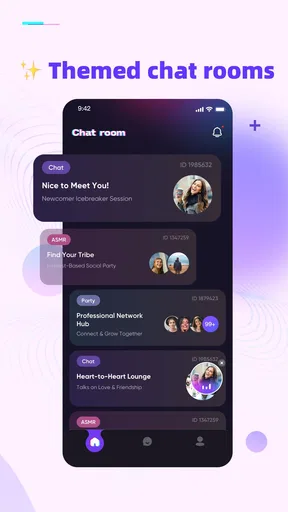
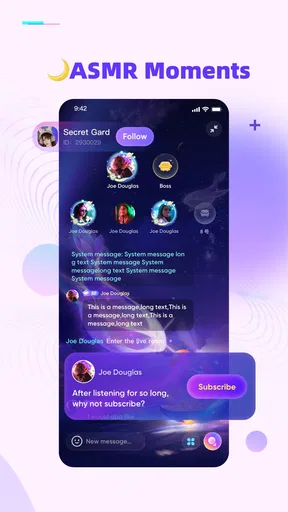
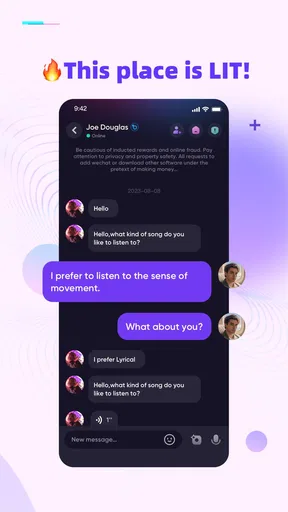
 Analysis by AppCompare
I approached PurPur as a social app rather than another general-purpose chat service, and that distinction matters. Its central appeal is the idea of finding people to spend time with and turning that connection into a shared party-like experience. After using it, my view is fairly clear: PurPur is most interesting for adults who want a more playful way to meet buddies, but it is not the best replacement for a private messenger, a carefully moderated community, or a conventional event-planning tool.
The app is free to install, which makes trying it relatively easy, although optional purchases range from $3.99 to $99.99 per item. It comes from purpur.live and sits in the social category, with a Mature 17+ rating. That age guidance should be taken seriously: this is an adult-oriented space for social discovery, not an app I would hand to a teenager or recommend using casually around children.
What using PurPur feels like in practice
The most useful way to understand PurPur is to think of it as a meeting point built around energy and spontaneity. Instead of opening a blank chat window and wondering what to say, I found the concept encourages a more immediate question: who is around, and what kind of social moment can happen now? That makes the app feel less formal than a calendar-based event service and more purposeful than a standard feed.
That focus can be refreshing. Traditional social networks often ask users to maintain a profile, follow a large number of accounts, and sort through an endless stream of posts. PurPur’s appeal is narrower. It is aimed at the moment when I want company, conversation, or a livelier interaction rather than passive scrolling. For someone who has recently moved, works remotely, or simply wants to widen a social circle, that narrower purpose gives the app a reason to exist.
At the same time, the experience depends heavily on the quality and availability of other people using it. A social app cannot create chemistry on its own. PurPur can make the first step feel more approachable, but it cannot guarantee that a new contact will share my interests, respond promptly, or behave in a way I enjoy. I would therefore judge it by the opportunities it creates, not by expecting every interaction to become a lasting friendship.
A realistic everyday use case
Imagine finishing work on a Friday with no evening plan. I might open PurPur, look for people who seem interested in a relaxed social session, and start with a low-pressure conversation rather than committing to a full night out. If the exchange feels comfortable, the party-oriented format gives the interaction a natural direction. If it does not, I can leave without having invested in a complicated event or invited strangers directly into my personal messaging accounts.
That scenario is where the app makes the most sense. It gives an unplanned evening a social starting point. It is less useful when I already know exactly who I want to contact, because a normal messaging app will usually be faster and more predictable for that job.
Worth Reading Before You Choose

EA SPORTS FC Mobile 26 Is a Bigger Football Game, but It Takes Time

Flipboard Shows What News Apps Must Do Beyond the Feed

Switching to Android Auto Means Rethinking Your Driving Routine

Google Calendar Makes a Crowded Week Easier to Manage

Ludo King Makes the Most of the Minutes Between Plans

Baby Panda World Brings Quick Play to Modern Phones, but Its Game Library Feels Busy
The strongest reason to try it
PurPur’s strongest quality is its social framing. The app does not seem designed merely to collect contacts; it tries to make meeting people feel like an activity. That difference may sound small, but it changes how I approach the service. I am not only asking whether someone is online. I am also considering whether the interaction has enough momentum to become enjoyable.
For shy users, this can reduce the awkwardness of a completely open-ended introduction. A shared party theme or lively setting gives both people something to react to. I still need to communicate clearly, but I am not forced to carry every second of the conversation alone. This is a practical advantage over a basic profile directory, where two people may match and then immediately run out of context.
Another strength is that PurPur can sit between two familiar alternatives. A general social network is broad but noisy. A private messenger is comfortable but usually limited to people I already know. PurPur occupies the space between them: it is more intentional about meeting others than a feed, while remaining more spontaneous than arranging a formal gathering through an event platform.
I would not call that a universal improvement. People who dislike meeting strangers online may find the same focus uncomfortable. But for users who want a nudge toward conversation, the app’s party-centered identity is more meaningful than a generic promise to “connect.”
How I would use it without wasting time
My first practical tip is to decide what I want before opening the app. There is a difference between looking for a quick conversation, hoping to find a recurring social group, and simply browsing out of boredom. PurPur is more useful when I enter with a small objective. Without one, the novelty of discovering people can turn into aimless checking.
My second tip is to treat the first exchange as a screening step, not a commitment. I would keep early conversation inside the app until the person has shown basic respect and consistency. I would also avoid sharing an address, workplace details, financial information, or other personal identifiers simply because the interaction feels lively. A party atmosphere can make people lower their guard faster than they intended.
A third useful habit is to judge the quality of an interaction by how easy it is to set boundaries. If someone reacts badly when I decline a topic, slow down the conversation, or end the session, that is useful information. The app’s social energy should never override ordinary safety judgment. In my experience with people-finding services, the ability to leave comfortably is just as important as the ability to start.
The meaningful weakness: social discovery is uneven
The same openness that makes PurPur appealing also creates its biggest weakness. I cannot assume that every available person will be a good fit, and I cannot treat a lively interface as proof that the community will always feel active or welcoming. The value of a social network is shaped by timing, location, interests, and the behavior of its members. Those factors can make one session feel promising and another feel thin.
This is where PurPur differs from a private group chat. In a group I create with friends, I already understand the social expectations. In PurPur, I have to learn those expectations through interaction. That can be exciting, but it also requires patience and stronger personal boundaries. Users looking for dependable communication with known contacts will probably feel more comfortable with a conventional messenger.
I also think the purchase structure deserves attention. The app is free, but the available in-app items can become expensive at the upper end, reaching $99.99 for a single item. I would not spend simply to make a weak connection feel more promising. Before paying for anything, I would use the free experience long enough to decide whether the app’s social rhythm suits me. Optional spending should support an experience I already value, not compensate for disappointment.
The Mature 17+ label adds another practical limitation. Adults may appreciate having an explicitly older audience in mind, but the label should not be confused with a guarantee that every conversation will be mature in tone or safe in practice. I would still approach new contacts carefully, avoid rushing into private details, and use the app only in situations where I can stop comfortably.
Who will get the most from it
PurPur is a good fit for adults who enjoy spontaneous social discovery and do not expect every new contact to become a close friend. It may be especially appealing to someone who has recently entered a new city, wants more casual interaction after work, or finds traditional networking too stiff. The app’s party-oriented approach can provide enough structure to make the first conversation easier.
It may also suit users who are tired of passive social feeds. If I already spend too much time watching other people’s updates without actually speaking to anyone, an app focused on buddies and shared activity can feel more direct. The important shift is from consuming content to participating in a social moment.
I would recommend a slower approach for people who are naturally cautious online. That does not mean avoiding PurPur altogether. It means using it with a clear exit plan, keeping personal details private at first, and remembering that a friendly exchange is not the same as trust. The app can support social confidence, but it should not replace judgment.
Who should choose something else
I would skip PurPur if my main goal were private, reliable communication with family, colleagues, or established friends. A standard messenger will be simpler for sending a direct message, sharing a known plan, or keeping a conversation organized over time.
I would also look elsewhere if I wanted a structured local event service with detailed scheduling, formal attendance planning, or a strong emphasis on verified real-world groups. PurPur’s appeal is spontaneity, so users who prefer carefully arranged activities may find its social approach too loose.
It is not my first recommendation for anyone who dislikes meeting unfamiliar people online. Even a well-designed social setting cannot remove the uncertainty of interacting with strangers. Likewise, users who want a quiet, low-distraction experience may find the party angle more energetic than they prefer.
Compatibility, maturity, and the practical details
On the technical side, the current release is version 1.7.0 and requires Android 8.0 or later. That makes it accessible to many Android users without requiring a very recent phone. I would still keep the operating system updated, especially when using any app centered on contact with other people.
The service has passed the early experimental stage without becoming a huge mainstream network. It has over 100 thousand installs, an average rating of 3.6, and around 184 ratings. Those figures suggest a modest but real audience, while also reminding me not to assume that every social niche will be equally active. The community is large enough to justify trying, yet still small enough that the experience may depend strongly on when I use it.
The app was released on September 17, 2025, so I view it as a relatively young service. That can be a positive for users who like discovering communities before they become crowded, but it also means I would keep expectations measured. A newer social app may still be finding its identity, and the way people use it can change as the audience grows.
My approach to privacy and personal safety
Because PurPur is built around meeting buddies and socializing, I would use a separate mindset from the one I use for a simple entertainment app. I would avoid assuming that a profile tells me much about a person. I would also be careful about moving conversations to another service too quickly, since doing so can remove the context and controls of the original platform.
If I ever arranged an in-person meeting after using the app, I would choose a public place, tell someone I trust where I was going, and make my own way there. I would not let the party theme pressure me into staying longer, sharing transportation, or accepting an invitation that felt wrong. These are not reasons to reject the app; they are sensible conditions for using any service that helps strangers connect.
There is also a difference between being socially open and being constantly available. I would check PurPur at times when I could give a conversation proper attention, rather than responding while distracted or exhausted. That small habit improves the chance of a meaningful exchange and makes it easier to notice when a conversation is becoming uncomfortable.
What I would improve in the experience
My main wish would be for the app to make social expectations especially clear. When a service combines discovery, buddies, and parties, users benefit from knowing whether a particular interaction is casual, ongoing, or intended to lead somewhere else. Clear context reduces misunderstandings and helps people decide how much time and personal information to invest.
I would also value tools that help users manage the difference between a fun first impression and a dependable connection. A person can be entertaining for a few minutes without being a good long-term match. Anything that helps me organize promising contacts, step away from poor matches, and keep control of my attention would strengthen the app without taking away its spontaneity.
Those observations do not cancel out PurPur’s central idea. They explain the trade-off more honestly. The app works best when I want discovery and energy; it works less well when I need certainty, privacy among known contacts, or a formal plan.
My final recommendation
After weighing the experience, I see PurPur as a focused social experiment with a clear audience rather than an all-purpose communication app. Its party-oriented identity gives conversations more momentum than a blank chat screen, and its buddy-finding purpose can help adults who want to make social interaction more active. That is the strongest case for installing it.
The limitations are equally important. The quality of the experience depends on the people available, the app may feel less useful outside its spontaneous social niche, and the higher-priced in-app items require restraint. The Mature 17+ rating also means I would approach it as an adult space that still demands personal caution, not as a guaranteed safe environment.
My recommendation is to try PurPur if you want casual, lively social discovery and are comfortable setting firm boundaries. I would begin with the free experience, avoid rushing into purchases or private contact details, and give it a fair trial during the times I genuinely want company. If I mainly need dependable conversations with people I already know, I would choose a regular messenger instead. For the right user, though, PurPur offers a more playful first step toward meeting buddies than the usual social feed.
Pros
- Simple interface makes navigation quick for new users.
- Lightweight design uses little storage space on most devices.
- Colorful visuals give the app a friendly
- appealing look.
- Core features are easy to understand without a long tutorial.
- Suitable for short sessions when you want quick entertainment.
Cons
- Some features may feel limited compared with more established apps.
- The experience can become repetitive after extended use.
- Performance may vary on older or budget devices.
- In-app ads can interrupt usage
- depending on the version.
- Privacy and data practices should be checked before creating an account.
FAQs for PurPur
What is PurPur, and what can I use it for?
PurPur is an app whose exact purpose may vary depending on the version and platform available in your region, so it is worth checking the official store description before installing it. In general, users should review the listed features, supported devices, account requirements, and intended audience. This helps confirm that PurPur matches your needs rather than relying only on its name or promotional screenshots.
Is PurPur free to download and use?
Before downloading PurPur, check whether the store listing identifies it as completely free, supported by advertising, or offering optional in-app purchases. Some features may require a subscription or one-time payment after installation. I also recommend reviewing the payment terms, trial period, renewal policy, and refund conditions, particularly if the app requests billing information during registration or setup.
Does PurPur require an account or personal information?
PurPur may request permissions or account details depending on the features you want to use. Before accepting, carefully examine requests involving contacts, photos, location, notifications, microphone, or storage and allow only what appears necessary. You should also read the privacy policy to understand what information is collected, why it is processed, whether it is shared, and how your account can be deleted.
Which devices and operating systems are compatible with PurPur?
Compatibility can differ between Android and iOS versions, and older phones may not support every feature even when the app installs successfully. Check the official Google Play or App Store page for the minimum operating-system requirement, download size, latest update date, and device restrictions. Keeping your system updated may also improve stability, security, and access to newly released functions.
Is PurPur safe and reliable to install?
The safest way to install PurPur is through its official Google Play or Apple App Store listing rather than an unknown third-party website. Before installation, verify the developer name, user reviews, update history, privacy disclosures, and permissions. After opening the app, watch for unexpected advertisements, repeated permission requests, crashes, or unusual battery and data usage, and uninstall it if anything seems suspicious.


